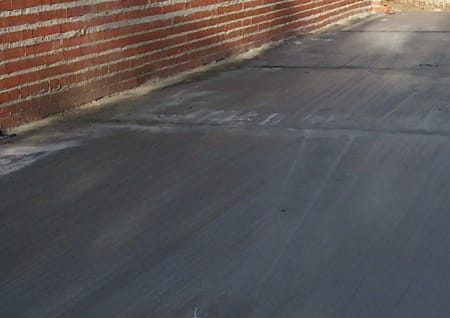
Anyone who has to use concrete outdoors in cold and wet weather should know how to use the concrete properly even in low temperatures. Rain and frost can damage the still fresh concrete and reduce its stability and hardness.

At low temperatures, concrete takes longer to cure completely. During this time it is vulnerable to stress. By drying the concrete faster in cold weather, you can prevent damage to the concrete.
In winter, it makes sense to buy fast-binding cement. If you have cement without a rapid binder, you can mix a hardening accelerator into the concrete afterwards. Quick-setting binder ensures that the fresh concrete hardens faster without causing cracks. The most commonly used hardening accelerator is calcium chloride. However, if steel parts are used to reinforce the concrete, calcium chloride should be avoided, as otherwise the steel can rust and cause so-called concrete cancer.
Subsequently mixed quick-setting binder should be dosed exactly according to the instructions. In most cases, one should not exceed 2% of the weight of the cement powder.
During curing, the concrete must be protected from environmental influences. Quick-setting binders accelerate curing, but do not protect against frost. The fresh concrete should not be exposed to a temperature of less than 12 degrees until it is completely dry. To protect the concrete from the cold, cover it with blankets or polystyrene and use a radiant heater if necessary. To prevent the cement powder from being washed out of the concrete by rain before it has hardened, the concrete should be protected by a weatherproof tarpaulin.