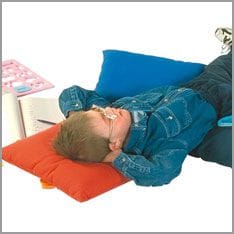
If you are lucky enough to be able to take a nap in the afternoon every day, you should take advantage of this, as it gives you an extra break that will have a positive impact on our otherwise hectic lives. Researchers have even been able to prove that the risk of a heart attack is reduced by more than 30% for regular afternoon naps.
However, most people allow themselves a nap like this at most once at the weekend, but many do without, or find a nap in the afternoon less productive because they get up even more tired afterwards than they were when they went to bed.
To avoid this effect, you should consider a few aspects and control the duration of your nap.

The phases of human sleep are characterised by their duration and depth. The first phase, the light sleep phase, helps the body to relax and leave the outside world behind so that it can then enter the deep sleep phase.
During the light sleep phase, it is still relatively easy to wake up again, as the body and its functions have not yet fallen so far into a passive state that it does not take a long time to get going again. So if you end your nap in the afternoon before the deep sleep phase has begun, which is the case after about half an hour, you can get up feeling rested.
However, if you have already entered one of the deep sleep phases and are then woken up, the result is that you do not feel rested and need a while to wake up. In most cases, this means that the important REM (rapid eye movement) phase, which reactivates bodily functions, has not yet been completed. This phase of rapid eye movement ensures that both the brain and body are revitalised and that you can turn over during sleep at night to ensure even blood circulation to the body.
In the deep sleep phase, the body is paralysed so that the dreams experienced in it are not carried out too actively; the REM phase lifts this blockade again and allows us to wake up briefly, consciously or unconsciously.
During the night, an adult, healthy person sleeps through about 4-6 90-minute sleep cycles, the deep sleep phases of which decrease towards the morning to make it easier to wake up. For our afternoon sleeper, this means that, as previously mentioned, he must either end his nap before the deep sleep phase, or else sleep an entire 90-minute cycle, because the first cycles of sleep in particular have a long deep sleep phase, which, if disturbed, will only lead to you feeling like you're exhausted.
Power napping
Even employers in companies and corporations have discovered the benefits of a short nap in the afternoon and put them into practice. Previously limited to countries in the Far East and the USA, they now offer their employees quiet rooms where they can take a restorative nap. This has led to the coining of the term "power napping".
But this method of a short nap is not new, it has been known for a very long time, even without the advantages of modern science, people knew about the benefits of an afternoon nap.
Even monks in the Middle Ages are said to have deliberately limited their naps so that they could quickly get back to work fresh and alert.
To do this, they sat down on a chair with a spoon in each hand and fell asleep. When they were about to enter the deep sleep phase, the spoons fell out of their hands as the body went into a paralysed state and the clinking sound of the spoons falling to the floor acted like an alarm clock.
Today you can set yourself a modern alarm clock, which has the clear advantage that you can take your nap in bed or on the couch instead of on a rather uncomfortable chair and in a sitting position.