The blood travels downwards through the arteries and is transported back upwards towards the heart by the veins in our legs and pelvis. Many women often develop problems, especially as they get older, if their connective tissue is weak for hereditary reasons and its elasticity decreases even further with age. Varicose veins can be one of the consequences.
A woman's pregnancy also puts a strain on the connective tissue and veins, as the amount of blood increases with the abdomen and the veins and venous valves have to work harder to transport the blood back upwards.

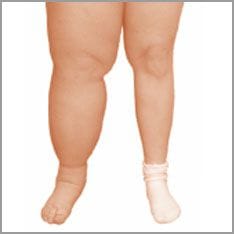
Unfavourable circumstances, such as prolonged standing, further aggravate the problem and it is not uncommon for water to accumulate in the legs and for a tingling sensation, cramps or tension and heaviness to accompany the pregnant woman, which can be very uncomfortable. But there are also some pregnancy-related reasons that prevent the blood from flowing back towards the heart normally.
How does water retention occur?
The task of the venous valves is to keep the blood pumped upwards by the heart in the veins in stations, because without this system the blood would always sink back downwards.
The venous valves therefore prevent the blood from flowing backwards. The increased blood volume during pregnancy also increases the ability of the veins to absorb blood, causing them to expand and the connective tissue to weaken. Hormonal changes in the woman's body further favour this phenomenon and the pregnant woman's body also tends to accumulate water in the tissue.
At some point, the venous valves can no longer close properly. This happens particularly frequently in the last trimester of pregnancy, when the baby presses on the pelvic veins in addition to the factors already mentioned.
This results in a certain amount of backflow into the legs and, as the water in the blood is heavier than its other components, it is mainly the water that accumulates in the tissue of the legs.
How can you take the strain off your legs?
The measures that can be taken to counteract blood stasis and also to alleviate water retention and the associated discomfort are quite simple to implement.
- Make sure you get enough exercise and roll your foot well so that the blood is pumped.
- Put your legs up often, never cross them when sitting.
- In the morning before getting up, stretch your legs upwards, let your feet circle and then "cycle" in the air for a few minutes.
- Perform cold calf casts from the knee downwards.
- Wear support stockings, but they must be used correctly and put on as soon as you get up.
- Use herbal embrocations, e.g. with horse chestnut, to promote blood circulation.