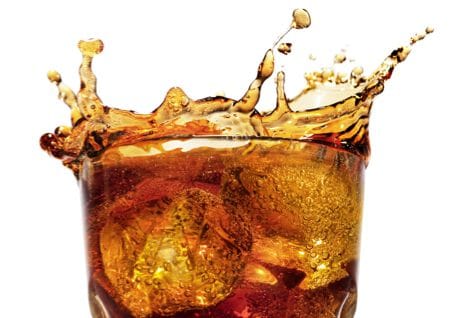
Carbonated drinks such as lemonade, cola, sparkling water or beer taste particularly good iced. The carbonic acid is refreshing, especially on hot summer days. Not everyone likes lemonade served with ice cubes because it dilutes the drink. To make the drinks ice-cold anyway, they are then quickly put in the freezer and forgotten about. What happens to carbonated drinks when they freeze?

Lemonade is a syrupy mass that is diluted with water and carbonated. The carbonic acid gives the lemonade the bubbles that give the drink its refreshing qualities. Sparkling water is carbonated mineral water. Beer bubbles because of the carbonic acid produced during fermentation. Carbonic acid remains in the drink as long as it remains tightly sealed and the container holds enough pressure. If the pressure is reduced by opening the bottle, the drink is shaken vigorously or left to stand for too long, the carbonic acid escapes and makes the drink stale.
The carbonic acid is not dissolved in the liquid, but merely mixed with it. Therefore, a carbonated drink will only remain fizzy as long as it is kept in the refrigerator, at room temperature and under pressure. As the carbonic acid escapes, the air bubbles begin to float freely to the surface and create the fizz.
So, since the carbonic acid is not dissolved in the water, the air bubbles only stay in it as long as they remain separated. When conditions change and the air bubbles combine with each other, they split off from the liquid and strive upwards, as they have a lower density than the liquid. When freezing lemonade, beer or fizzy drinks, the air bubbles can more easily combine with each other and thus escape more easily as the water becomes a solid aggregate and combines with other water molecules. This process compresses the air bubbles and thus forces them out of the mixture.
Water expands when it freezes. The expanding, solidifying water is the main reason that a plastic bottle or can of drink bulges when the liquid inside freezes. The pressure present in the bottle due to the carbon dioxide creates forces against the confines of the bottle. Occasionally the pressure can become so strong that the container gives way at its weakest point and bursts. This happens especially with glass bottles, as they cannot expand to relieve the pressure.
Once lemonade or beer has been frozen, the carbonic acid does not return to its original location in the liquid after thawing. The carbonic acid can now no longer be absorbed so easily by the liquid due to the reduced water surface, which is why the drink usually tastes stale after thawing.