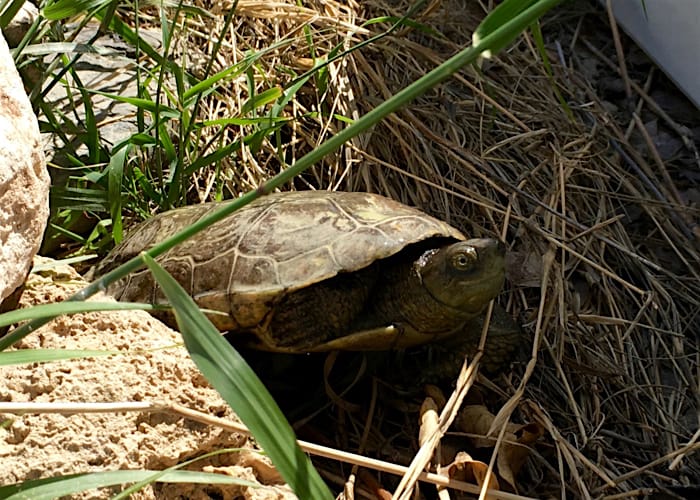
Aquatic turtles are fascinating pets. Even though they are relatively easy to care for, they are sensitive creatures and need species-appropriate living conditions to lead a contented life.

Water basin of the turtle
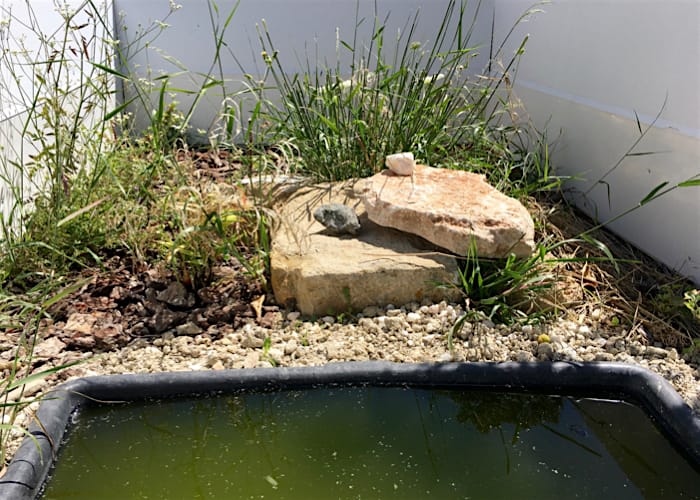
An aquatic turtle needs a tank that is deep enough so that it can fully submerge and swim in it. A 120 litre tank is recommended for a single turtle. It also needs a dry area around the tank where it can warm up, hide and move around.
The water basin should be equipped with flat stones or wooden boards to make it easier for the turtle to climb in and out of the water.
It is best to use rainwater for the turtle's tank, as tap water contains chlorine, which is harmful to the turtle.
The turtle prefers to stay in water that is natural and cloudy, as this is where it feels safest. The water in the tank should be refreshed occasionally, but only ever replace about half of the water so that the climate is largely maintained.
Dry area
In the tortoise's dry area, there should be places where the animal can burrow, preferably in sand, soil or mulch. It also needs a grotto or cave where it can crawl into.
The tortoise likes to run through tall plants. However, the whole area should not be covered so that it can occasionally warm itself in the sun. Tortoises that are not kept outside need a UV lamp if they do not get sunlight.
Handling the turtle
As the turtle lives in a bacteria-rich environment, you should wash your hands well after touching it. Don't forget that turtles generally don't like to be handled. If you occasionally take them out of their tank, you should make sure that they are not exposed to drastic changes in temperature, as their bodies need a while to adapt to new conditions. Drastic changes put a strain on their immune system.
Feeding
A tortoise eats two to three times a week. Species-appropriate food is available from pet shops. Only put a little food into the water at a time so that the turtle can eat it all and the rest does not rot in the water.
Security
It is certainly best to keep a tortoise outdoors if possible. In winter, however, it must be protected from frost. It is therefore often a good idea to keep it in a conservatory. It is absolutely essential to protect the tortoise from dogs and cats. Even chickens can pose a danger.
Although tortoises are not fast, they are amazing climbers and can easily escape if their enclosure is not secure enough. The walls of the enclosure should be at least 40cm high and smooth.