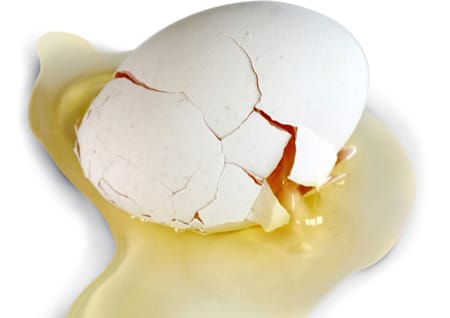
Eggs are very healthy for cats, but they also pose risks to the cat. As a cat owner, you can take care to avoid these health risks.

Can cats be fed raw or cooked egg?
As carnivores, cats need a protein-rich diet. Eggs contain a lot of protein and generally have a high nutritional value. The body can absorb and utilise the protein from the egg better than from other protein-rich foods. The egg yolk is also very good for coat growth and appearance. The two potential dangers of feeding raw eggs are salmonella and biotin deficiency.
Feeding raw eggs to cats
There is a common belief that cats are immune to salmonella poisoning because feral cats eat raw meat and eggs. It is not very common for a cat to get salmonella poisoning, but it can happen. The salmonella bacteria are destroyed when the egg is cooked, but the raw egg has a much higher nutritional value for the cat than the cooked one.
Raw egg whites contain an enzyme that reduces the absorption of biotin and thus possibly causes a biotin deficiency. However, nutritionists estimate that you would have to eat at least two eggs a day over a longer period of time to cause deficiency symptoms. If one occasionally feeds a raw egg white, biotin deficiency is unlikely.
To ensure that the cat does not get a biotin deficiency, only the raw egg yolk should be fed.