Couscous is a tiny grain ball made from semolina wheat. The semolina is sprinkled with water and formed into small balls with the hands, dusted with flour to separate the grains. Then the grains are sieved so that the grains that are too small fall through the sieve and can be dusted and shaped again. This process is repeated until the semolina is completely formed into small couscous grains.
Originally, the dish 'couscous' comes from the Berbers, but it is becoming increasingly popular all over the world.
The name comes from the Magrehbi Arabic word kuskusu or ksaksu, which is a derivative form for "well formed, rounded".
One of the first written records comes from a 13th century Hispano-Muslim cookbook. The title of the book is "Kitāb al-tabǐkh fǐ al-Maghrib wa'l-Andalus" (the Maghreb and Al Andalus cookbook) and includes a couscous recipe that was "known throughout the world".
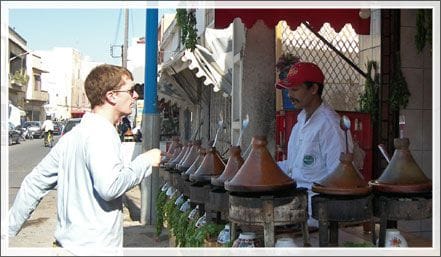
In Arab countries like Algeria, Morocco, Libya and Tunisia, it is very common 'home cooking'. You can find snack shops with a number of tajine dishes in the streets of Marakesh, for example.
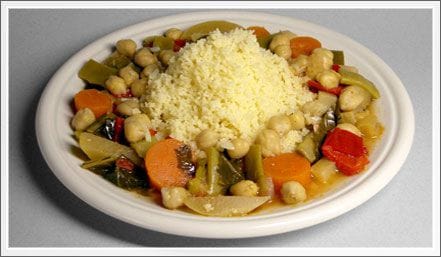
A couscous dish is usually served with a meat or vegetable stew. It can be eaten cold or warm. In Arab countries, couscous is traditionally served in a tajine even today.
The traditional way of cooking or steaming couscous is very time-consuming, but in our fast-moving times there is a type of couscous on the market that can be cooked in just a few minutes.
That is one reason why couscous is also quite popular here in Europe.
But the question you often ask yourself as a non-Arab is: how do I cook couscous in the first place?
Here are some suggestions as an alternative to the traditional way.
(more…)